The Java platform is a free software download that many of today’s websites and apps can’t run without. Java is practically a requirement for most internal and cloud applications.
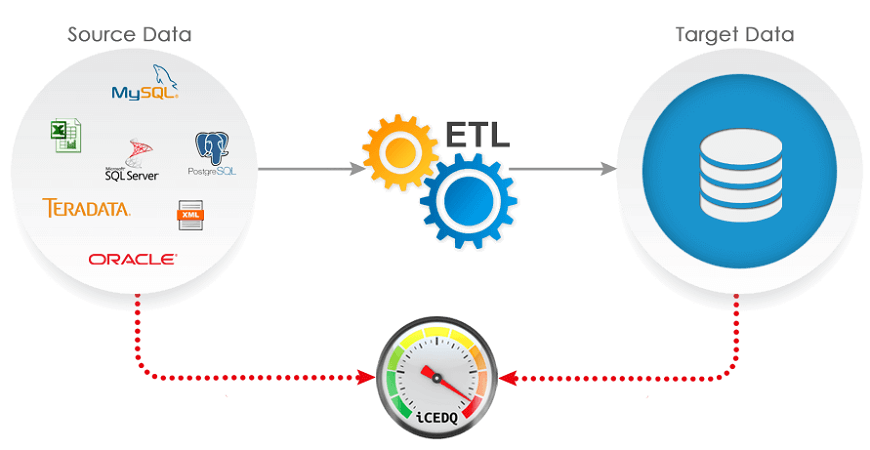
Developers use its object-oriented programming language to build desktop and mobile apps. You can write complex ETL (extract, transform and load) processes in Java that go beyond what’s available out of the box in most ETL tools.
If you use Java to script code for data transformations or other ETL functions, you also need an ETL tool that supports Java work. Java is one of the most popular and powerful scripting languages. And there’s an abundance of open source and paid ETLs to choose from that work with Java code. You won’t have any trouble finding one that meets your specific data project needs.
This blog gives you information on some of the best open source ETLs for Java. Some ETLs that used to be open source have become paid services. At the end of the blog, we also list some paid ETLs that might meet your needs for big BI data projects that need pro-level support. For more details ETL Testing Training
Free and open source Java ETLs
1. Apache Spark
Spark has become a popular addition to ETL workflows. The Spark quickstart shows you how to write a self-contained app in Java. You can get even more functionality with one of Spark’s many Java API packages.
Spark has all sorts of data processing and transformation tools built in. It’s designed to run computations in parallel, so even large data jobs run fast—100 times faster than Hadoop, according to the Spark website. And it scales up for big data operations and can run algorithms in stream. Spark has tools for fast data streaming, machine learning and graph processing that output to storage or live dashboards.
Spark is supported by the community. If you need help, try its mailing lists, in-person groups and issue tracker.
2. Jaspersoft ETL
Jaspersoft ETL is a free platform that works with Java. With this open source ETL tool, you can embed dynamic reports and print-quality files into your Java apps and websites. It extracts report data from any data source and exports to 10 formats.
If you’re a developer, Jaspersoft ETL is an easy-to-use choice for data integration projects. You can download the community edition for free. The open source version is recommended for small work groups. For larger enterprises and professional-level support, you might opt for the enterprise edition.
3. Scriptella
Scriptella is an open source ETL tool that was written in Java. It was created for programmers to simplify data transformation work. To embed or invoke Java code in Scriptella, you need the Janino or JavaScript bridge driver or the Service Provider Interface (SPI). The SPI is a Scriptella API plug-in that’s a bit more complicated. See the Using Java Code section in the Scriptella documentation for more options on using Java in Scriptella.
Scriptella supports cross-database ETL scripts, and it works with multiple data sources in a single ETL file. This ETL tool is a good choice to use with Java when you’ve got source data in different database formats that needs to be run in a combined transformation. For more info ETL Training
4. Apatar
If you work with CRM systems, Apatar, a Java-based open source ETL tool, might be a good choice. It moves and synchronizes customer data between your own systems and third-party applications. Apatar can transform and integrate large, complex customer datasets. You can customize this free tool with the Java source code that’s included in the package.
The Apatar download saves time and resources by leveraging built-in app integration tools and reusing mapping schemas that you create. Even non-developers can work with Apatar’s user-friendly drag-and-drop UI. No programming, design or coding is required with this cost-saving, but powerful, data migration tool that makes CRM work easier.
5. Pentaho Kettle
Pentaho’s Data Integration (PDI), or Kettle (Kettle E.T.T.L. Environment), is an open source ETL tool that uses Pentaho’s own metadata-based integration method. Kettle documentation includes Java API examples.
With Kettle, you can move and transform data, create and run jobs, load balance data, pull data from multiple sources, and more. But you can’t sequence your transformations. You’ll need Spoon, the GUI for designing jobs and transformations that work with Kettle’s tools: Pan does data transformation, and Kitchen runs your jobs. However, Spoon has some reported issues. Learn more from ETL Testing Course
6. Talend Open Source Data Integrator
Go past basic data analysis and storage with Talend Open Studio for Data Integration, a cloud-friendly ETL tool that can embed Java code libraries. Open Studio’s robust toolbox lets you work with code, manage files, and transform and integrate big data. It gives you graphical design and development tools and hundreds of data processing components and connectors.
With Talend’s Open Studio, you can import external code, create and expand your own, and view and test it in a runtime environment. Check your final products with Open Studio’s Data Quality & Profiling and Data Preparation features.
7. Spring Batch
Spring Batch is a full-service ETL tool that is heavy on documentation and training resources. This lightweight, easy-to-use tool delivers robust ETL for batch applications. With Spring Batch, you can build batch apps, process small or complex batch jobs, and scale up for high-volume data processing. It has reusable functions and advanced technical features like transaction management, chunk-based processing, web-based admin interface and more. For more skills ETL Testing Online Training
8. Easy Batch
The Easy Batch framework uses Java to make batch processing easier. This open source ETL tool reads, filters and maps your source data in sequence. It processes your job in a pipeline, writes your output in batches to your data warehouse, and gives you a job report. With Easy Batch’s APIs, you can process different source data types consistently. The Easy Batch ETL tool transforms your Java code into usable data for reporting, testing and analysis.
9. Apache Camel
Apache Camel is an open source Java framework that integrates different apps by using multiple protocols and technologies. It’s a small ETL library with only one API for you to learn. To configure routing and mediation rules, Apache Camel provides Java object-based implementation of Enterprise Integration Patterns (EIPs) using an API or declarative Java domain-specific language. EIPs are design patterns that enable enterprise application integration and message-oriented middleware.
Apache Camel uses Uniform Resource Identifiers (URIs), a naming scheme that refers to an endpoint that provides information. Examples are what components are used, the context path and the options applied against the component. This ETL tool has more than 100 components, including FTP, JMX and HTTP. It runs as a standalone application in a web container like Apache Tomcat, a JEEE application server like WildFly, or combined with a Spring container.
10. Bender
Amazon’s AWS Lambda runs serverless code and does basic ETL, but you might need something more. Bender is a Java-based framework designed to build ETL modules in Lambda. For example, this open source ETL appends GeoIP info to your log data, so you can create data-driven geological dashboards in Kibana. Out of the box, it reads, writes and transforms input that supports Java code: Amazon Kinesis Streams and Amazon S3.
Bender is a robust, strongly documented and supported ETL tool that enhances your data operations. It gives you multiple operations, handlers, deserializers and serializers, transporters and reporters that go beyond what’s available in Lambda.
To get in-depth knowledge, enroll for a live free demo on ETL Testing Certification
 java programming